One of the most common questions couples ask when trying to conceive is how often they should have sex to get pregnant. Some deliberately abstain for several days to “save” sperm, while others have sex every day until it becomes exhausting.
The short answer is that sex two to three times a week throughout the cycle, and every one to two days during the fertile window, is a practical and effective approach for most couples. Here is why.
When Is the Chance of Pregnancy Highest?
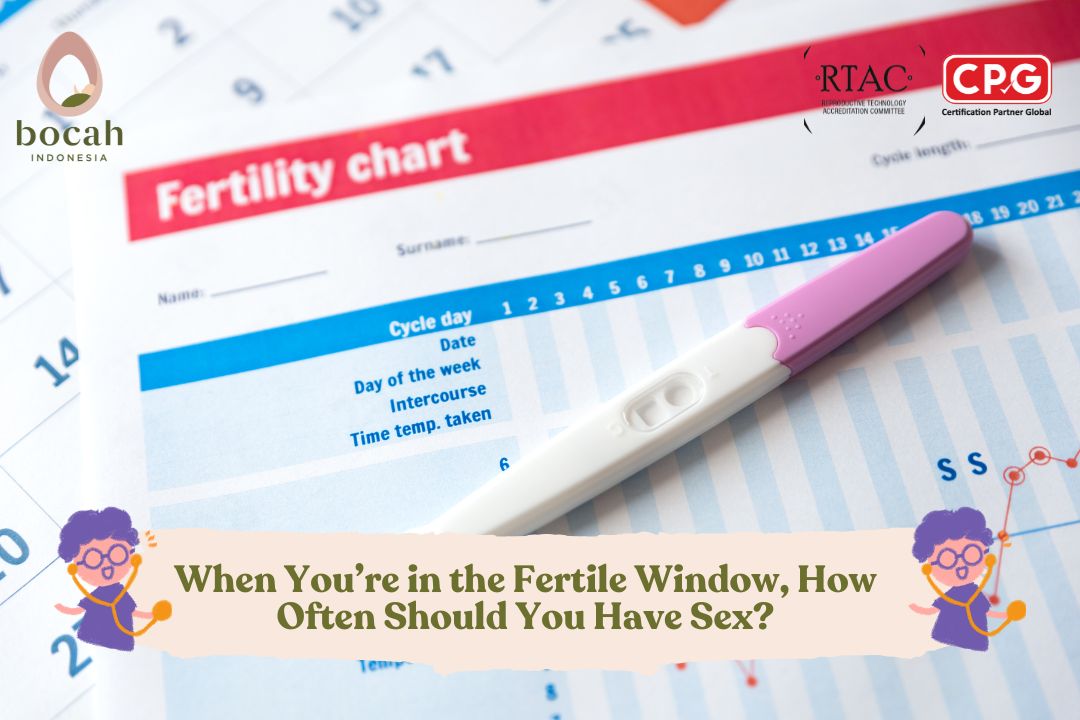
The chance of pregnancy is highest during the fertile window: roughly the five days before ovulation and the day ovulation occurs. Sperm can survive for three to five days in the female reproductive tract, whereas anegg cell usually remains viable for only about 12–24 hours after release.
This means sex in the days leading up to ovulation can be more effective than waiting for ovulation day itself. To understand the timing, learn about thepre-ovulation phase or use ourfertile-window calculator.
What Is the Ideal Frequency of Sex When Trying to Conceive?
Frequency
When
Notes
2–3 times per week
Throughout the cycle
Relaxed and sufficient for most couples
Every 1–2 days
During the fertile window
Helps optimize timing without undue pressure
Every day
During the fertile window
Usually fine when semen parameters are normal
The key is consistency, not perfection. Having sex regularly means sperm can already be present when ovulation happens, whenever it occurs.
No. In men with normal semen parameters, sperm are produced continuously, so daily sex does not meaningfully “run out” of sperm.
However, when sperm count is low, a doctor may suggest a two- to three-day interval to support sperm concentration. Consult a clinician for a recommendation based on the male partner’s individual results.
Myths About Frequency and Timing
Myth: You need to abstain for several days to make sperm more concentrated. Fact: Abstaining for too long may reduce sperm motility.
Myth: Sex only on ovulation day is enough. Fact: The days before ovulation are also important because sperm can be ready and waiting for the egg.
Myth: Certain positions or elevating your legs after sex guarantees pregnancy. Fact: There is no evidence that these practices increase the chance of conception.
Myth: The more often you have sex, the faster you will get pregnant. Fact: Consistent sex with good timing matters more than an excessive frequency.
If you have had regular, unprotected sex for 12 months without pregnancy when the female partner is under 35, or for 6 months when she is 35 or older, it is time to consult a doctor. Learn more aboutwhen to see a doctor for fertility treatment.
Seek advice earlier if there is pain during sex, irregular menstrual cycles, or a history of certain medical conditions. Afertility specialist can guide you through the appropriatefertility evaluation.
How to Keep Trying to Conceive Relaxed and Less Stressful
Avoid making sex too rigidly scheduled, keep it natural and enjoyable.
Focus on intimacy with your partner, not only on achieving pregnancy.
Manage stress, as prolonged stress can make the fertility journey feel more difficult.
Stress and emotional wellbeing can be closely connected to the fertility journey. Learn more aboutmental health and fertility.
Fertility Treatment Options If Pregnancy Has Not Happened
At Bocah Indonesia, a fertility clinic in Jakarta and Tangerang, you can access consultation, testing, and the treatment option that best suits your needs with support from an experienced, compassionate team.
Frequently Asked Questions (FAQ)
Is having sex every day too often when trying to conceive?
No, provided it is not forced and does not leave either partner exhausted. Daily sex is generally fine for men with normal semen parameters.
How long can sperm survive in the uterus?
Sperm can generally survive for three to five days in the female reproductive tract. This is why sex in the days before ovulation can still lead to pregnancy.
Does abstaining from ejaculation for a few days make sperm more fertile?
Not necessarily. A long abstinence period can reduce sperm motility. For semen analysis, abstinence for two to five days is usually recommended, depending on your doctor’s instructions.
If timing sex feels stressful, should we stop tracking?
You can. If a strict schedule feels stressful, try having sex regularly two to three times a week without overthinking the dates. A supportive relationship and peace of mind are part of a healthy fertility journey.
Conclusion
For most couples, a good frequency when trying to conceive is two to three times per week, increasing to every one to two days during the fertile window. The priorities are consistency, good timing, and avoiding unnecessary pressure.
If pregnancy has not happened after trying for an appropriate period, do not hesitate to seek advice or beginin vitro fertilization (IVF) at Bocah Indonesia. You may also reviewIVF costs or contact us for an initial consultation.
References
Wilcox AJ, Weinberg CR, Baird DD. Timing of sexual intercourse in relation to ovulation: effects on the probability of conception, survival of the pregnancy, and sex of the baby. New England Journal of Medicine. 1995;333(23):1517–1521.doi.org/10.1056/NEJM199512073332301
Zegers-Hochschild F, Adamson GD, Dyer S, et al. The International Glossary on Infertility and Fertility Care, 2017. Fertility and Sterility. 2017;108(3):393–406.doi.org/10.1016/j.fertnstert.2017.06.005
Centers for Disease Control and Prevention (CDC). Assisted Reproductive Technology (ART).cdc.gov/art