Being diagnosed with a chocolate cyst can be worrying, especially when you are planning a pregnancy. The questions patients often ask are whether a chocolate cyst can make it harder to conceive and which fertility treatment may be appropriate.
Chocolate cysts, also known as endometriomas, can affect fertility, but they do not mean that pregnancy is impossible. This article explains what chocolate cysts are, how they may affect fertility, and which treatment options you and your partner may consider.
What Is a Chocolate Cyst (Endometrioma)?
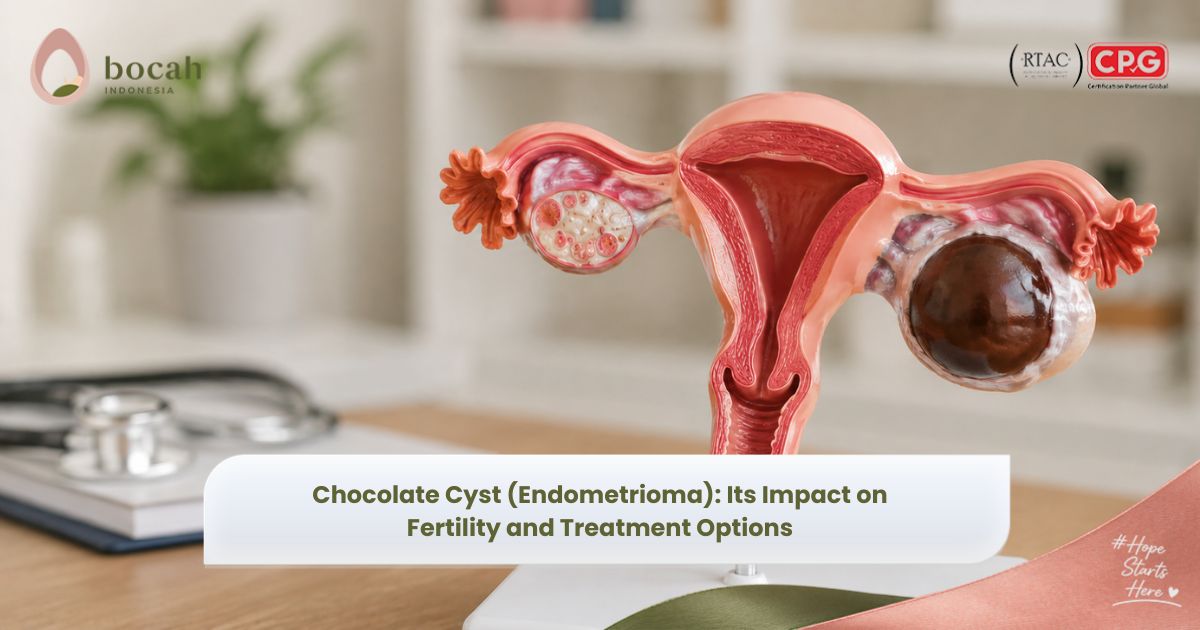
A chocolate cyst, or endometrioma, is an ovarian cyst caused byendometriosis, a condition in which tissue similar to the uterine lining grows outside the uterus. This tissue can thicken and bleed with each menstrual cycle. Old blood becomes trapped inside the cyst, giving it a dark brown, chocolate-like appearance.
Chocolate cysts are among the most common types ofendometriosis cyst. To learn about other cysts that can affect the female reproductive system, read our article onovarian cysts.
Symptoms of Chocolate Cysts
Not every chocolate cyst causes symptoms. When symptoms occur, they may include:
Mulai Promil Sekarang
Pelvic pain that persists or becomes worse during menstruation.
Severe menstrual cramps (dysmenorrhea).
Pain during sexual intercourse.
Pain during bowel movements or urination.
Menstrual changes, such as irregular bleeding.
Chocolate cysts are commonly identified through atransvaginal ultrasound performed by a doctor.
How Can Chocolate Cysts Affect Fertility?
They May Affect Egg Quality and Ovarian Reserve
Chocolate cysts may damage surrounding ovarian tissue and may affect the quality and reserve ofegg cells. AnAMH test can help assess ovarian reserve.
They Can Cause Inflammation Around the Fallopian Tubes
Inflammation associated with endometriosis can affect the area around the ovaries and lead toblocked fallopian tubes, making it more difficult for egg cells and sperm to meet.
Treatment Decisions Need Careful Consideration
Surgical removal of a cyst may be an option, but it can also reduce healthy ovarian tissue. The decision to operate should therefore take into account age, cyst size, symptoms, and ovarian-reserve assessment results.
Do Chocolate Cysts Need to Be Removed Before Pregnancy?
Not always. Surgery is not the only option and may not be recommended for a small, asymptomatic cyst, particularly when ovarian reserve is already limited. A fertility specialist will consider the full clinical picture before recommending surgery, proceeding directly with fertility treatment, or combining both approaches.
Fertility Treatment Options for People with Chocolate Cysts
Trying Naturally or Intrauterine Insemination (IUI)
In many cases,in vitro fertilization (IVF) may be recommended because it can optimize the chance of pregnancy without waiting for the cyst to disappear completely. You can review ourIVF success rates for further information.
The Role of a Fertility Specialist in Choosing the Next Step
Every case of chocolate cysts is different, so the best approach should be decided with afertility specialist who understands the condition. At Bocah Indonesia, a fertility clinic in Jakarta and Tangerang, care is integrated from assessment and ovarian-reserve evaluation to an individualized treatment plan supported by an experienced fertility team.
Frequently Asked Questions (FAQ)
Can chocolate cysts go away on their own?
Usually, no. Chocolate cysts tend to persist or grow because they originate from endometriosis tissue. Treatment focuses on managing symptoms and supporting the most appropriate fertility plan.
Does every chocolate cyst need surgery?
No. Surgery is generally considered when a cyst is large, causes severe symptoms, or is recommended by a doctor, while also taking ovarian reserve into account.
Can you get pregnant with a chocolate cyst?
Yes. Many women with chocolate cysts become pregnant, either naturally or with fertility treatment. Read more aboutendometriosis and pregnancy for an explanation of the possibilities.
What is the difference between a chocolate cyst and a typical ovarian cyst?
A typical ovarian cyst often contains clear fluid and may resolve on its own. A chocolate cyst develops from endometriosis, contains old blood, and tends to remain in the ovary.
Conclusion
Chocolate cysts can affect fertility, but the opportunity to become pregnant can remain very real with the right care. The key is a thorough assessment and choosing the option that best fits your and your partner’s circumstances.
If you would like to discuss chocolate cysts or beginin vitro fertilization (IVF) at Bocah Indonesia, our fertility team is ready to help. You can also reviewIVF costs or contact us for an initial consultation.
Practice Committee of the American Society for Reproductive Medicine. Endometriosis and infertility: a committee opinion. Fertility and Sterility. 2012;98(3):591–598.doi.org/10.1016/j.fertnstert.2012.05.031
Zegers-Hochschild F, Adamson GD, Dyer S, et al. The International Glossary on Infertility and Fertility Care, 2017. Fertility and Sterility. 2017;108(3):393–406.doi.org/10.1016/j.fertnstert.2017.06.005
Centers for Disease Control and Prevention (CDC). Assisted Reproductive Technology (ART).cdc.gov/art