The ERA test can help couples determine the best day for embryo transfer, thereby reducing the risk of implantation failure.
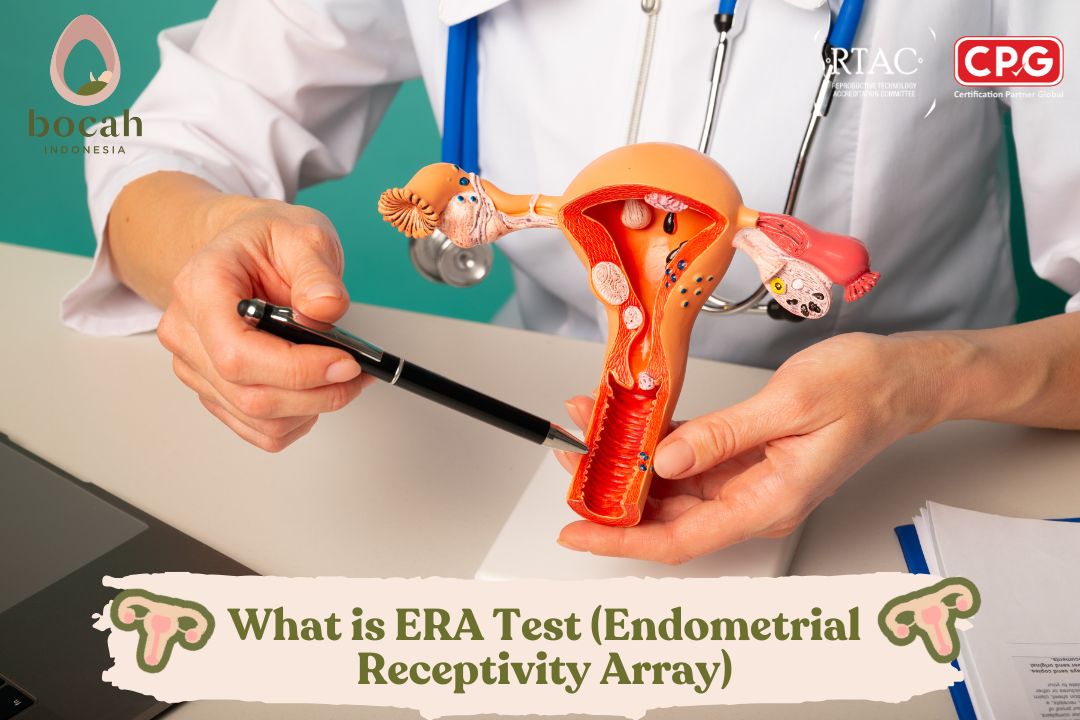
The ERA (Endometrial Receptivity Array) test is a diagnostic tool used to identify the “implantation window,” which is the optimal time for embryo attachment. This test makes it possible to perform embryo transfer at the most ideal timing, increasing the chances of a successful pregnancy.
Understanding the Implantation Window
The endometrium is the inner lining of the uterus where the embryo implants. To support this process, the endometrium is able to regenerate itself during each menstrual cycle and becomes receptive during the woman’s fertile phase. This period, when the endometrium is receptive, is known as the “implantation window,” and it typically lasts for only about three days.
A receptive endometrium allows the embryo to attach to its cells and then invade deeper layers to continue its development.
In IVF procedures, embryo transfer is typically scheduled at the same time for all patients, when the endometrium is assumed to be ready for implantation. This approach is referred to as the “standard timing.” However, in reality, the implantation window varies among women, which can contribute to embryo transfer failure.
Mulai HER Hope
Statistics indicate that 3 out of 10 women experience a shifted implantation window. Thus, even if the embryo is of good quality, pregnancy may fail if the timing is incorrect and the endometrium is not receptive.
Today, advances in medical technology allow us to determine the implantation window with reasonable accuracy through the ERA test. This test helps physicians determine the optimal time to perform a frozen embryo transfer in selected cases.
ERA Procedure
The ERA procedure begins with an endometrial biopsy. The preparatory process before the biopsy follows the typical IVF protocol for a frozen embryo transfer. However, instead of performing the embryo transfer at the end of the cycle, an endometrial biopsy is taken. As a result, the actual embryo transfer will be postponed for 1–2 months while waiting for the test results.
After the endometrial sample is collected, it undergoes genetic expression analysis using next-generation sequencing (NGS). This analysis identifies which genes are active or inactive and measures their levels of expression.
Based on the biopsy analysis, the endometrium is classified as either receptive or non-receptive. Non-receptive endometrium is further categorized as prereceptive or postreceptive. These findings determine the optimal timing for embryo transfer in the next cycle.
A receptive result indicates that embryo transfer can be performed at the same time in the following cycle—i.e., using the standard timing. This means the implantation window was “open” during the biopsy, so the recommended approach is to proceed with embryo transfer under identical conditions.
A non-receptive result indicates a shifted implantation window. In such cases, the true implantation window can be estimated using the ERA predictor:
Prereceptive: The endometrium has not yet reached the receptive phase; therefore, embryo transfer should be delayed by several hours or days past the standard timing.
Postreceptive: The endometrium has already passed the receptive phase; therefore, embryo transfer should be performed earlier than the standard timing.
Benefits of the ERA Test
As mentioned earlier, the ERA test helps determine a woman’s specific implantation window, which may differ from standard timing. This enables personalized embryo transfer scheduling, potentially increasing the chances of pregnancy.
The ERA test can also help confirm whether implantation failure in patients with good-quality embryos is caused by endometrial non-receptivity.
Side Effects of the ERA Test
The side effects of the ERA test are mainly related to the endometrial biopsy procedure. The most commonly used method is the Pipelle biopsy, a minimally invasive technique in which a small sample of endometrial tissue is collected using a thin, straw-like device called a Pipelle. The most frequent side effect is abdominal cramping. Less common side effects include vaginal bleeding, uterine infection, and, rarely, uterine perforation.
In some cases, the biopsy is performed as part of a surgical procedure, such as hysteroscopy, which carries its own risks. Hysteroscopy is performed in an operating room under general anesthesia and is used to diagnose abnormalities detected on ultrasound or to treat conditions such as uterine fibroids or polyps.
Effectiveness of the ERA Test in Improving Pregnancy Outcomes
Evidence regarding the effectiveness of the ERA test remains limited. However, several studies provide some insight:
2013 Study: An early study found that a shifted implantation window was more common in women with repeated implantation failure (RIF). Personalized embryo transfer (pET), rather than standard timing, improved outcomes in this group. The pregnancy rate was 51.7% in the RIF group and 50% in the non-RIF group. However, the small sample size prevented the results from being generalized.
2019 Systematic Review and Meta-analysis: A review of 163 studies involving 88,834 samples evaluated endometrial receptivity markers, including ERA. ERA was assessed in five studies involving women with prior failed embryo transfers. A total of 238 genes were examined to categorize endometrial receptivity. Patients with non-receptive results underwent pET. Pregnancy rates were similar between the receptive group (50.9%) and the non-receptive group undergoing pET (51.6%).
2024 Study: A more recent study involving 284 patients with repeated implantation failure found that those who underwent ERA had significantly higher clinical pregnancy rates (88.5% vs. 32%) and implantation rates (63.7% vs. 28.8%). The authors concluded that ERA effectively identified implantation window shifts and improved frozen embryo transfer (FET) success. However, the study was non-randomized and single-center.
On the other hand, a clinical trial published in The Journal of the American Medical Association (JAMA) presented the strongest negative evidence. The study investigated whether FET timing based on ERA results improved live birth rates compared with standard-timing embryo transfers in patients who had undergone preimplantation genetic testing for aneuploidy (PGT-A).
The results showed that patients with prereceptive ERA results who followed the recommendation to delay FET actually had lower clinical pregnancy rates (higher rates of chemical pregnancies) compared with the control group (58.5% vs. 61.9%). No significant differences were found among patients with receptive results. The lower effectiveness of ERA may be related to limited accuracy in predicting the true implantation window in non-receptive cases or other factors such as embryo quality.
In conclusion, the evidence on ERA remains contradictory, and larger multicenter studies are still needed. Based on current data, ERA may be most beneficial for patients with repeated implantation failure accompanied by a shifted implantation window.
Indications for ERA in IVF Programs
Based on available scientific evidence, the American Society for Reproductive Medicine (ASRM) and the European Society of Human Reproduction and Embryology (ESHRE) recommend ERA only for couples who have experienced recurrent implantation failure—defined as three or more failed IVF cycles with good-quality embryos after other potential causes have been ruled out.
In its 2023 guidelines, ASRM advises against routine use of ERA outside of clinical trials. Its high cost and invasive nature (biopsy) limit widespread application. If ERA is being considered, it is essential to discuss the risks and benefits thoroughly with a fertility specialist. In many cases, preimplantation genetic testing for aneuploidy (PGT-A) and standard frozen embryo transfer are sufficient.
Conclusion
A successful IVF pregnancy depends on performing embryo transfer when the endometrium is receptive and capable of supporting implantation. The ERA test offers new hope for couples who have experienced repeated implantation failure after embryo transfer. Speak with your doctor to evaluate the risks, benefits, and whether the ERA test is appropriate for your situation.
Source:
Craciunas L, Gallos I, Chu J, Bourne T, Quenby S, Brosens JJ, Coomarasamy A. Conventional and modern markers of endometrial receptivity: a systematic review and meta-analysis. Hum Reprod Update. 2019 Mar 1;25(2):202-223. doi: 10.1093/humupd/dmy044. PMID: 30624659.
Doyle N, Jahandideh S, Hill MJ, Widra EA, Levy M, Devine K. Effect of Timing by Endometrial Receptivity Testing vs Standard Timing of Frozen Embryo Transfer on Live Birth in Patients Undergoing In Vitro Fertilization: A Randomized Clinical Trial. JAMA. 2022 Dec 6;328(21):2117-2125. doi: 10.1001/jama.2022.20438. PMID: 36472596; PMCID: PMC9856480.
Garcia-Velasco JA, Llácer J, Requena A, Checa MA, Bellver J, Bosch E, Espinós JJ, Fabregues F, Ortega AI, Fontes J, Spanish Infertility SWOT Group. Endometrial receptivity tests in reproduction: a SWOT analysis. AJOG Global Reports. 2023 Aug 1;3(3):100260.
Lessey BA, Young SL. What exactly is endometrial receptivity? Fertil Steril. 2019 Apr;111(4):611-617. doi: 10.1016/j.fertnstert.2019.02.009. PMID: 30929718.
Ruiz-Alonso M, Blesa D, Díaz-Gimeno P, Gómez E, Fernández-Sánchez M, Carranza F, Carrera J, Vilella F, Pellicer A, Simón C. The endometrial receptivity array for diagnosis and personalized embryo transfer as a treatment for patients with repeated implantation failure. Fertil Steril. 2013 Sep;100(3):818-24. doi: 10.1016/j.fertnstert.2013.05.004. Epub 2013 Jun 4. PMID: 23756099.
Simón C, Gómez C, Cabanillas S, Vladimirov I, Castillón G, Giles J, Boynukalin K, Findikli N, Bahçeci M, Ortega I, Vidal C, Funabiki M, Izquierdo A, López L, Portela S, Frantz N, Kulmann M, Taguchi S, Labarta E, Colucci F, Mackens S, Santamaría X, Muñoz E, Barrera S, García-Velasco JA, Fernández M, Ferrando M, Ruiz M, Mol BW, Valbuena D; ERA-RCT Study Consortium Group. A 5-year multicentre randomized controlled trial comparing personalized, frozen and fresh blastocyst transfer in IVF. Reprod Biomed Online. 2020 Sep;41(3):402-415. doi: 10.1016/j.rbmo.2020.06.002. Epub 2020 Jun 15. PMID: 32723696.
Wang X, Zhou X, Zhou Y, Zhang X. EFFECTIVENESS OF ENDOMETRIAL RECEPTIVITY ANALYSIS TEST IN RECURRENT IMPLANTATION FAILURE PATIENTS UNDERGOING FROZEN EMBRYO TRANSFER. Fertility and Sterility. 2024 Oct 1;122(4):e231-2.
After graduating from the Faculty of Medicine, University of Indonesia, dr. Fiona served as a Non-Permanent Employee (PTT) doctor from the Indonesian Ministry of Health in a remote village in Luwuk-Banggai Regency, Central Sulawesi. This experience led her to continue her master's degree in International Health at Gadjah Mada University, Yogyakarta.