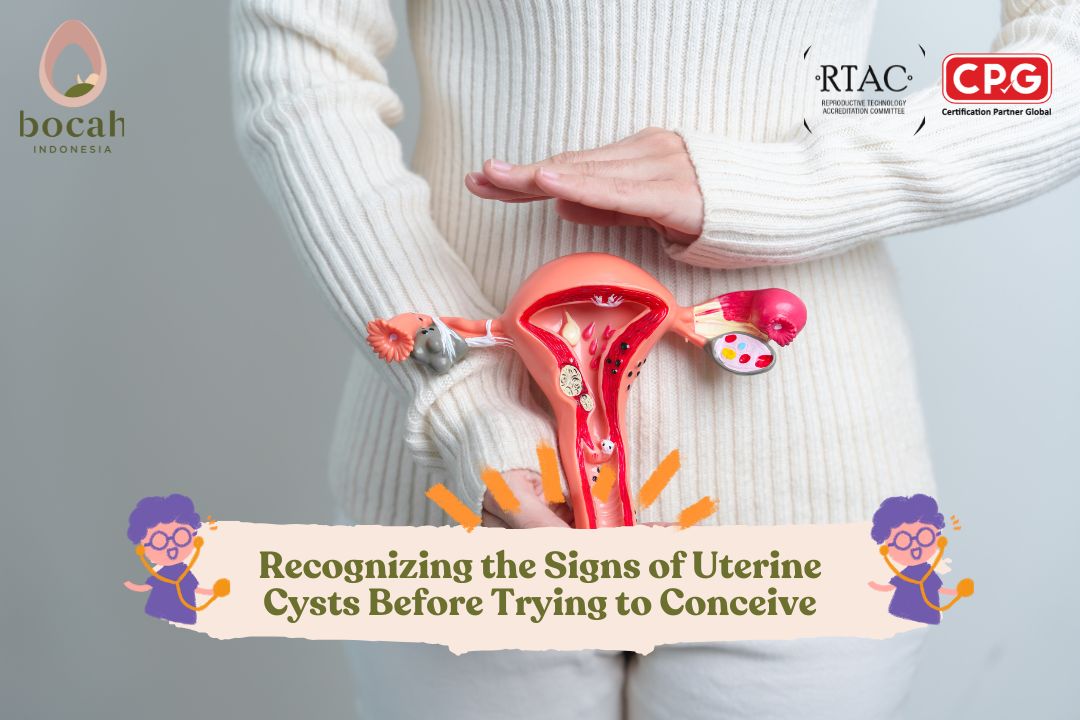
In the journey of a pregnancy program, uterine health plays a crucial role in supporting its success.
Undergoing a pregnancy program (trying to conceive) is not only about calculating the fertile window, but also about ensuring that the uterus remains healthy. Several uterine conditions can develop without obvious symptoms, including cysts, which are often only detected during medical examinations.
Although most cysts are benign, they still need to be recognized early. Especially for women who are hoping to conceive soon, understanding the signs of uterine cysts can help prevent fertility problems and ensure a smoother and more optimal pregnancy program.
What Is a Cyst?
A cyst is a lump filled with fluid or semi-solid tissue that can develop in various parts of the body, such as the skin, breasts, kidneys, and ovaries.
Although rare, cysts can also develop in the uterus. Uterine cysts generally occur due to blockage of certain ducts, such as glands in the cervix. Most uterine cysts are benign, but they can still cause discomfort, especially if they grow larger. This condition deserves attention, particularly for women who are focused on trying to conceive, as it may affect the chances of becoming pregnant.
Mulai HER Hope
Therefore, recognizing the signs of uterine cysts early can help couples prevent complications and obtain appropriate treatment.
Signs and Symptoms of Uterine Cysts
Below are several signs of uterine cysts that should not be ignored:
1. Lower abdominal pain
The most common complaint is pain in the lower abdomen. This pain occurs because the cyst can press on nearby nerves, tissues, or organs. The pain may become more pronounced during menstruation or if the cyst enlarges or ruptures. For women undergoing a pregnancy program, this condition can make daily activities uncomfortable.
2. A feeling of pressure in the pelvic area
Uterine cysts can cause a sensation of fullness or pressure in the pelvic and vaginal area. This happens because an enlarging cyst occupies space around the uterus and presses on surrounding organs.
3. Pain during sexual intercourse
Pain during sexual intercourse can also be a sign of uterine cysts. Penetrative activity may cause the cyst to be irritated or even rupture, especially if the cyst is located in the cervix. This condition can disrupt intimacy, particularly when couples are actively trying to conceive.
4. Vaginal discharge or bleeding
If a cyst ruptures, a woman may experience vaginal discharge accompanied by slight bleeding that resembles abnormal vaginal discharge. This discharge may sometimes have an unpleasant odor because it contains fluid, bacteria, and trapped cells from within the cyst.
It is important for couples to understand that not all uterine cysts cause symptoms. In some cases, cysts are only detected during medical examinations such as ultrasound (USG), which are commonly performed as part of fertility evaluations or pregnancy programs.
Treatment of Uterine Cysts
Most uterine cysts are small and do not require specific treatment. However, if a cyst causes symptoms or poses a risk to fertility, a doctor may recommend several treatment options, including:
Electrocautery ablation, a procedure that destroys the cyst using electrical current that generates heat.
Cryotherapy, a method that freezes the cyst with liquid nitrogen until the cyst tissue is destroyed.
Surgery, which may be considered if the cyst is difficult to access or suspected of containing cells with malignant potential.
That is an overview of the signs of uterine cysts that are important for couples to understand, especially when planning a pregnancy or trying to conceive. If any suspicious symptoms occur, it is advisable to consult a doctor promptly to receive proper examination and appropriate treatment.