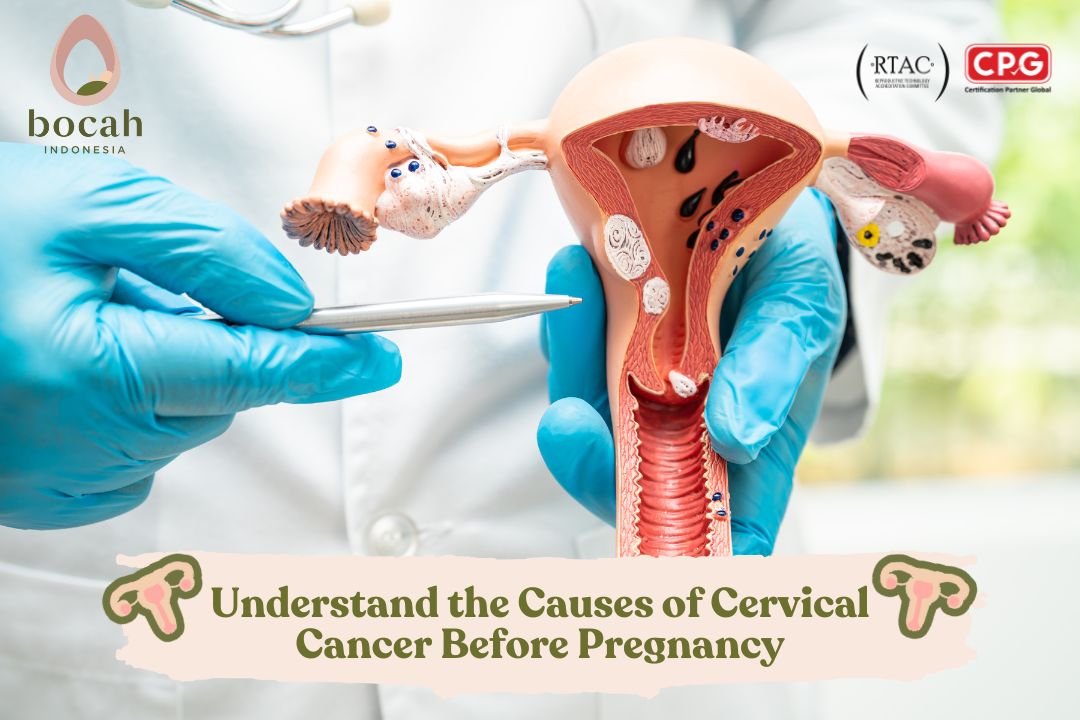
Various studies show that over 99% of cervical cancer cases are closely linked to human papillomavirus (HPV) infection.
For couples (Ayah dan Bunda) currently planning for a baby through a pregnancy program (promil), maintaining reproductive organ health is a crucial step that must not be ignored.
One condition requiring special attention is the health of the cervix (neck of the womb), as disorders in this area can affect fertility and increase the risk of infertility.
Cervical cancer is a disease that often develops slowly and is frequently asymptomatic in its early stages. Therefore, understanding the causes and risk factors early on can help you maintain uterine health, support the success of your pregnancy program, and prevent complications that could hinder your journey to conception.
Causes of Cervical Cancer
HPV is a group of viruses that can infect the cervix and is generally transmitted through sexual contact. Of the more than 100 known HPV types, approximately 14 are classified as high-risk for causing cervical cancer. The two types most frequently identified as causes are HPV types 16 and 18, which account for about 70% of cervical cancer cases worldwide.
Mulai HER Hope
Most sexually active individuals are at risk of HPV infection. However, in many cases, the immune system is capable of fighting the virus, allowing the infection to clear up on its own within 1–2 years without causing serious issues.
Parents should be aware that a brief HPV infection generally does not immediately cause cervical cancer. The risk increases significantly if the HPV infection persists over a long period or occurs for many years. It is this chronic infection that can trigger changes in cervical cells.
If left untreated, these cell changes can develop into cancer cells. This process is quite slow, potentially taking 15–20 years to finally develop into cervical cancer. For this reason, routine screening is vital, especially for women who wish to maintain uterine health to ensure a smooth pregnancy program and prevent infertility.
Risk Factors for Cervical Cancer
In addition to HPV infection, several factors can increase the risk of developing cervical cancer. These factors are generally related to HPV exposure and overall health conditions.
Sexual activity at a young age Engaging in sexual intercourse at an early age, especially under 18 years old, can increase the risk of HPV infection because cervical cells have not yet fully developed.
Having multiple sexual partners Changing sexual partners frequently, especially without protection such as condoms, can increase the risk of HPV transmission.
Weakened immune system Women with a compromised immune system, for example, due to HIV/AIDS or certain medical conditions, have a higher risk of experiencing persistent HPV infection that develops into cervical cancer.
History of Sexually Transmitted Infections (STIs) Sexually transmitted infections such as chlamydia, gonorrhea, or syphilis can increase the risk of HPV infection, thereby increasing the likelihood of cervical cancer.
Long-term use of oral contraceptives Consuming birth control pills for more than 5 years is known to potentially increase the risk of cervical cancer; therefore, regular consultation with a doctor is necessary.
Having had three or more full-term pregnancies Women who have experienced three or more pregnancies have a higher risk of developing cervical cancer, which is related to HPV exposure through sexual relations.
Smoking habits Smoking can double the risk of cervical cancer. Harmful substances in cigarettes can damage the DNA of cervical cells and reduce the immune system’s ability to fight HPV infection. This condition can also negatively impact fertility and increase the risk of infertility.
Cervical Cancer and Its Impact on Fertility
Cervical cancer not only impacts general health but can also affect a woman’s fertility. If the cancer has progressed and requires advanced treatment such as surgery, radiotherapy, or chemotherapy, the condition risks disrupting the function of the uterus and cervix. Consequently, the chance of conceiving naturally may decrease, and the risk of infertility increases.
For women who still wish to have children or are undergoing a pregnancy program, early detection of cervical cancer is critical. Treatment at an early stage is usually more minimal and offers a greater chance of preserving reproductive function.
The Importance of Early Detection of Cervical Cancer
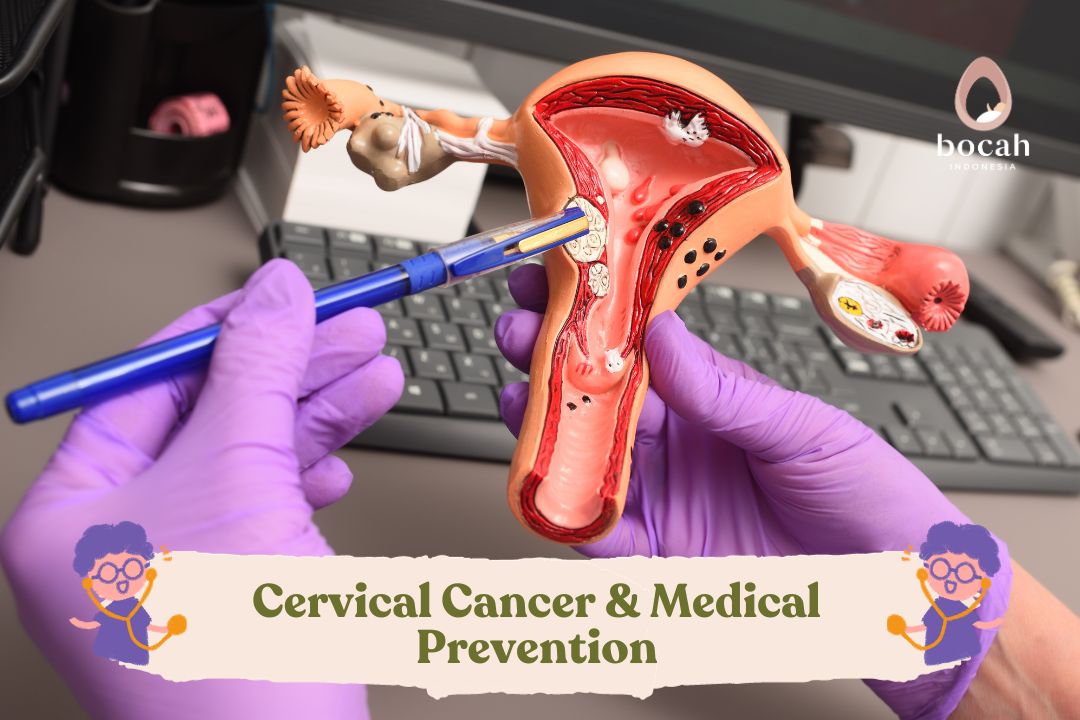
One of the main challenges of cervical cancer is that symptoms are often unnoticeable at the beginning. Therefore, routine screenings such as a Pap smear or HPV test are highly recommended, especially for women who are sexually active or planning a pregnancy.
Early detection allows for cell changes in the cervix to be found before they develop into cancer. This way, treatment can be administered faster, the risk of complications can be suppressed, and the chances of a successful pregnancy program are maintained.
The Role of the HPV Vaccine in Cervical Cancer Prevention
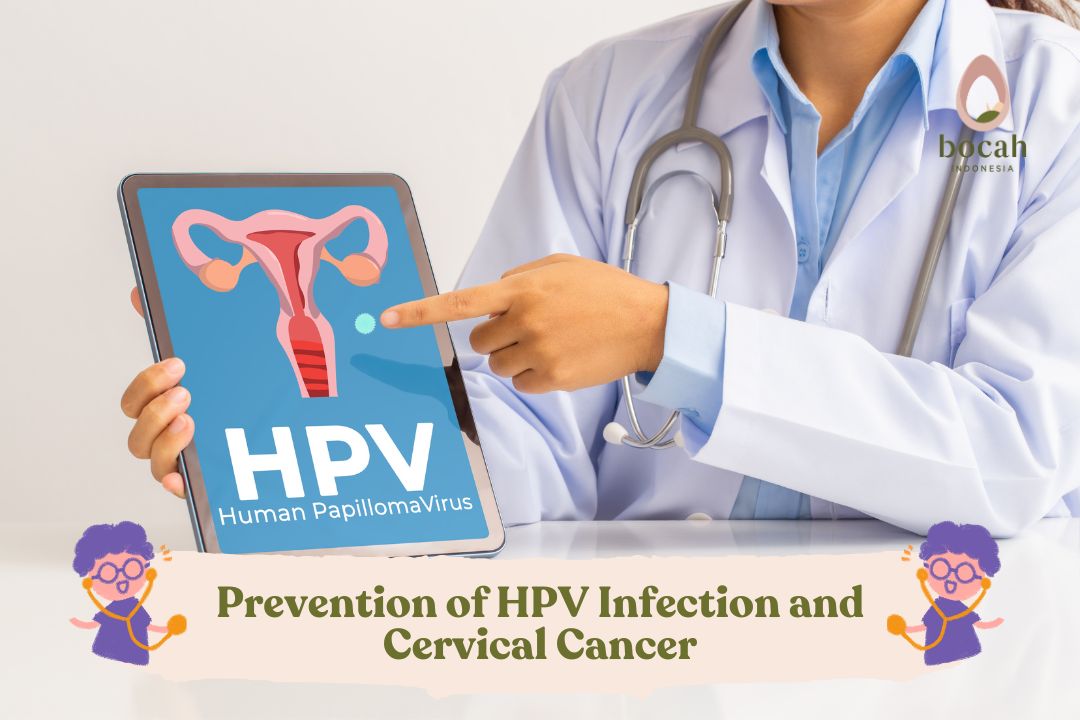
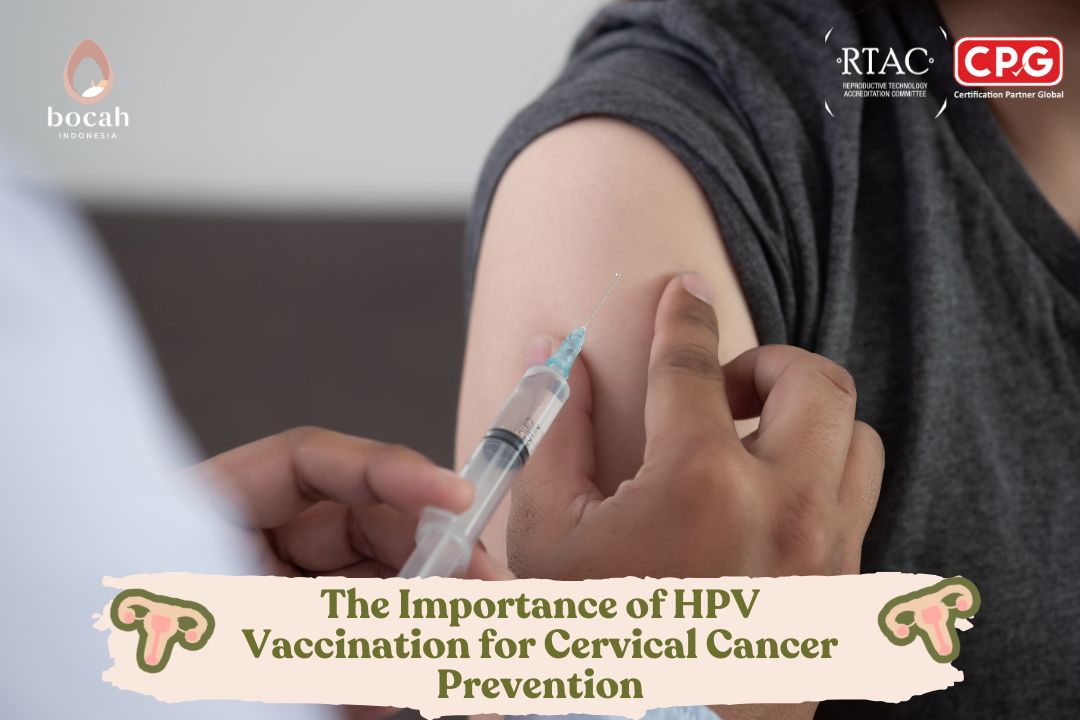
In addition to routine screening, the HPV vaccine is an effective preventive measure to protect against high-risk HPV infections, particularly HPV types 16 and 18. Ideally, this vaccine is administered before a person becomes sexually active, but it remains beneficial for married women in accordance with a doctor’s recommendation.
By lowering the risk of HPV infection, the HPV vaccine indirectly helps maintain cervical health and supports the success of future pregnancy programs.
Preventive Steps for Parents
To lower the risk of cervical cancer and maintain reproductive health, couples can take the following steps:
Practice safe and responsible sexual behavior.
Undergo routine Pap smear or HPV test screenings.
Maintain a healthy immune system through a healthy lifestyle.
Avoid smoking habits.
Consult a doctor before or during a pregnancy program.
As explained, the primary cause of cervical cancer is HPV infection. Therefore, maintaining safe sexual behavior, undergoing routine screenings, and keeping the immune system strong are essential steps for parents, particularly those undergoing a pregnancy program, to ensure optimal reproductive health.