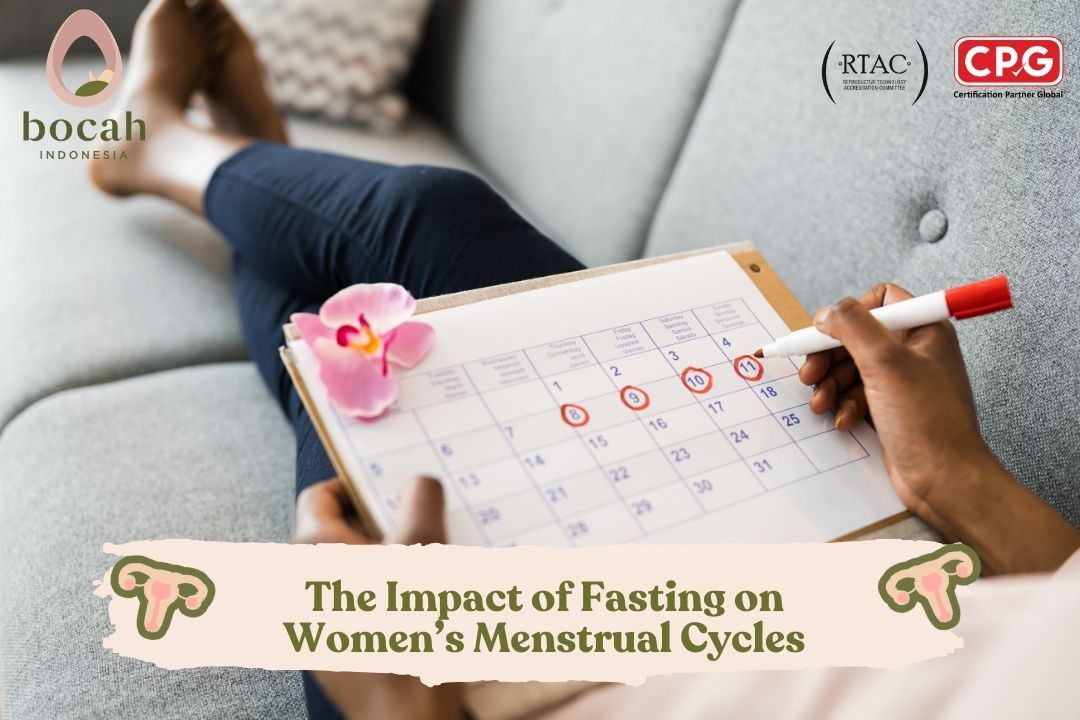
When entering the month of Ramadan or following certain fasting patterns, some women may notice changes in their menstrual cycle. What causes this?
Changes such as menstruation occurring earlier or later than usual, or differences in menstrual blood volume, often raise concerns—especially for women who are trying to conceive. Many people wonder whether fasting can influence the menstrual cycle and affect fertility.
To better understand this issue, it is important for couples to know how fasting may affect the body and what medical research says about the relationship between fasting and the menstrual cycle.
Why Can Fasting Affect the Menstrual Cycle?
The menstrual cycle is regulated by a complex hormonal system in the body known as the hypothalamic–pituitary–ovarian axis (HPO axis). This system controls the production of hormones such as estrogen and progesterone, which play important roles in ovulation and menstruation.
During fasting, the body experiences several physiological changes, such as:
Mulai Journey of Hope
Changes in eating patterns
Changes in sleep schedules
Changes in body metabolism
Adjustments in hormone levels
If the body does not receive adequate nutritional intake or experiences physical stress, hormonal balance may be temporarily disrupted. This condition can affect the regularity of the menstrual cycle in some women.
Research Findings on Fasting and the Menstrual Cycle
Several studies have examined the relationship between fasting and menstrual cycles. One of them was published in the Iranian Journal of Reproductive Medicine (2013) by Yavangi and colleagues.
The study involved 80 female university students whose menstrual cycles were observed for three months before Ramadan, during Ramadan, and three months after Ramadan. The results showed that:
Approximately 11.3% of participants experienced irregular menstrual cycles before Ramadan
30% experienced cycle irregularities during Ramadan
16.3% experienced irregularities after Ramadan
These findings suggest that menstrual cycle changes may occur during fasting, particularly in women who fast for more than 15 days. The types of changes observed included:
Oligomenorrhea (infrequent menstruation)
Polymenorrhea (more frequent menstruation)
Changes in menstrual blood volume
However, it is important to understand that these changes are generally temporary and the menstrual cycle typically returns to normal once the body adapts to the new dietary and activity patterns.
Another study published in the Middle East Fertility Society Journal also reported changes in menstrual patterns during Ramadan.
Research involving 85 adolescent girls showed that during Ramadan there were changes in menstrual patterns, particularly a significant increase in menstrual blood volume compared with before fasting.
Nevertheless, the study also found that the timing of fasting within the menstrual cycle phase (follicular phase or luteal phase) did not significantly affect the occurrence of menstrual cycle disturbances.
Does Fasting Affect a Pregnancy Program?
Couples do not need to worry excessively. Changes in menstrual cycles during fasting do not necessarily mean a reduced chance of pregnancy. As long as nutritional needs are met during suhoor (pre-dawn meal) and iftar (meal to break the fast), fasting generally does not interfere with attempts to conceive.
For women who are trying to conceive and wish to become pregnant quickly, the most important factors are maintaining a balanced diet, drinking enough water, and ensuring adequate intake of essential nutrients such as:
Folic acid
Iron
Protein
Vitamin D
Antioxidants
With a healthy lifestyle during fasting, the body can maintain hormonal balance and support optimal fertility.
Healthy Fasting Tips for Couples Trying to Conceive
To maintain fertility during fasting, couples can follow several recommendations:
Consume balanced and nutritious meals during suhoor and iftar, including vegetables, fruits, protein sources, and complex carbohydrates
Maintain adequate hydration by drinking enough water between iftar and suhoor
Avoid excessive sugar intake and high-fat foods
Get enough rest and manage stress effectively
Continue light physical activities
If there is a history of infertility or menstrual cycle disorders, consulting a doctor can help determine whether fasting is safe during a pregnancy program.
Conclusion
In conclusion, fasting may cause temporary changes in the menstrual cycle in some women, mainly due to changes in dietary patterns, metabolism, and daily activities. However, these changes are generally not permanent and do not always affect fertility.
If you are trying to conceive and experience significant menstrual cycle changes during fasting, it is advisable to consult a doctor.
Proper medical evaluation can help ensure that reproductive health is maintained and that the chances of achieving pregnancy remain optimal.