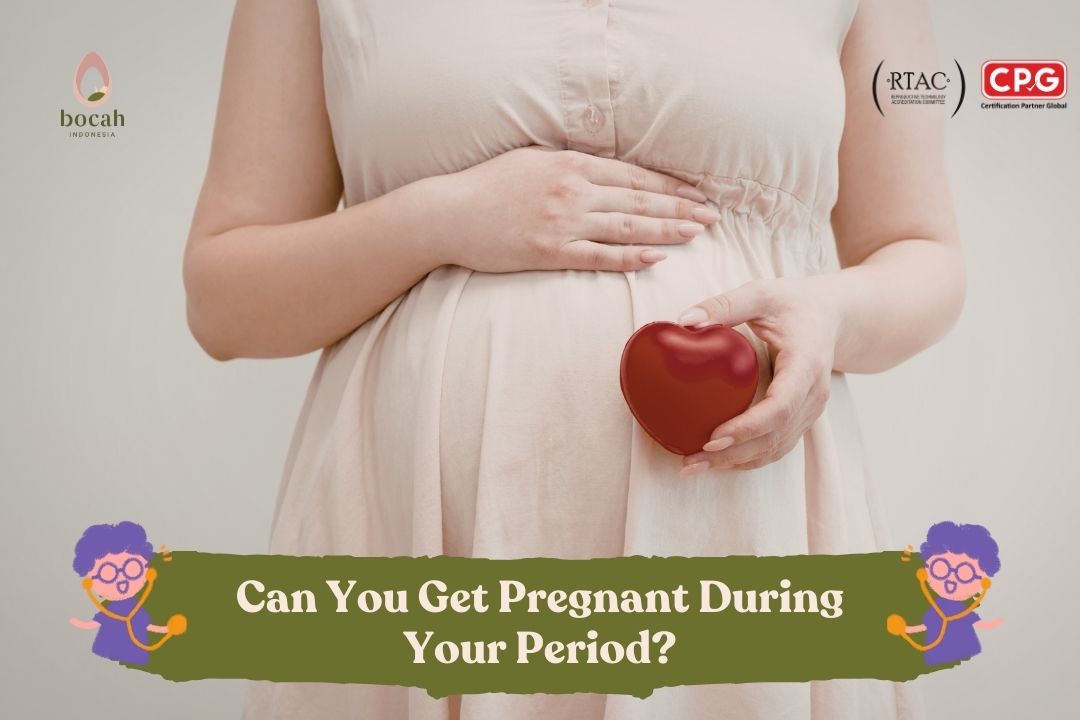
Getting pregnant during menstruation is unlikely, but it is not entirely impossible. For couples who are trying to conceive (TTC), this article explains the medical facts you need to know.
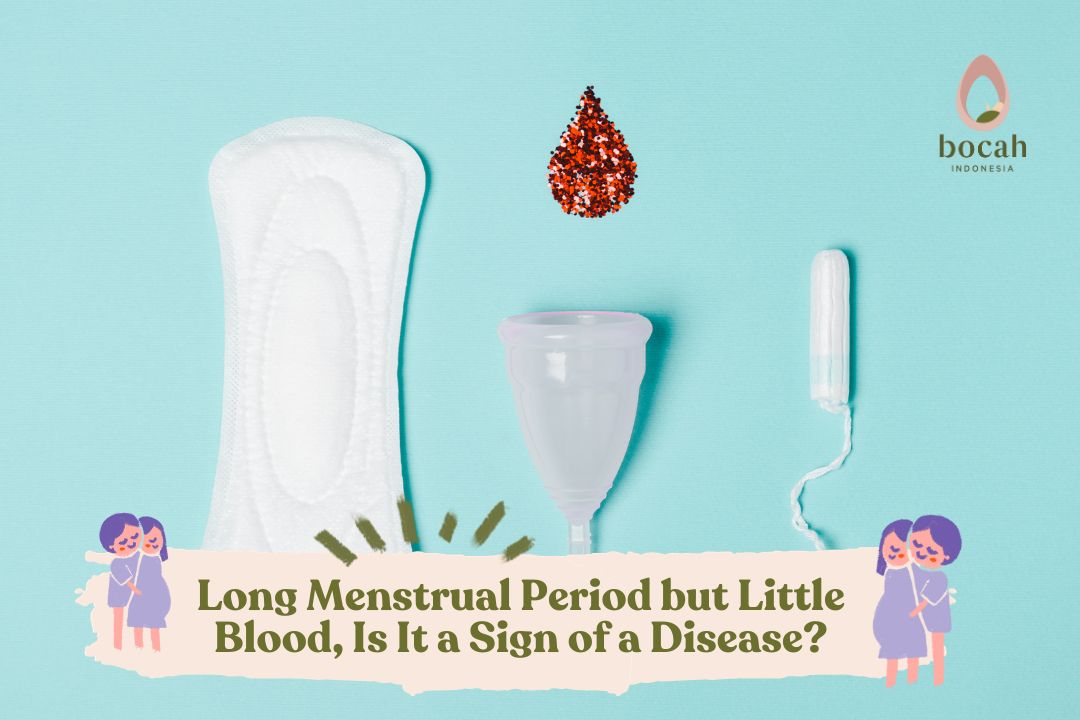
Many people assume that menstruation means pregnancy is impossible. In fact, this is a myth. Although the likelihood is lower, pregnancy can still occur during menstruation, especially in women with short or irregular menstrual cycles.
For couples undergoing a pregnancy program or trying to conceive (TTC), understanding how the menstrual cycle and fertile window work is essential. With accurate knowledge, the chances of achieving pregnancy can be optimized and better planned.
How Does Pregnancy Occur?
Pregnancy occurs when a sperm cell fertilizes an egg cell (ovum). The ovum survives for approximately 12–24 hours after being released during ovulation. Meanwhile, sperm can survive inside the female reproductive tract for up to 3 days, and in certain conditions, even longer.
This means that if sperm are already present in the reproductive tract before ovulation occurs, fertilization and pregnancy can still happen.
Mulai HER Hope
Understanding the Menstrual Cycle and Ovulation
The average menstrual cycle lasts 28 days, with:
The first day of menstruation counted as Day 1 of the cycle
Ovulation typically occurring around Day 14
However, not all women have a 28-day cycle:
Short cycle (21 days): ovulation may occur around Day 7
Long cycle (35 days): ovulation may occur around Day 21
This is why each woman may have a different fertile window.
Why Can Pregnancy Occur During Menstruation?
Several conditions may allow pregnancy to occur even during menstruation:
1. Short or Variable Ovulation Timing
In women with a normal menstrual cycle (28–35 days), ovulation generally occurs around Day 14 after the first day of menstruation. If sexual intercourse occurs during menstruation, ovulation is typically still several days away. In such cases, sperm usually do not survive long enough to fertilize the egg, making the likelihood of pregnancy relatively low.
However, in some women, ovulation may occur earlier—for example, on Day 11 or Day 13. If unprotected intercourse occurs on Day 7 or near the end of menstruation and ovulation happens earlier than expected, pregnancy remains possible. This is because sperm can survive in the reproductive tract and fertilize the egg once ovulation occurs.
2. Mistaking Ovulation Spotting for Menstruation
Some women may mistake light bleeding for menstruation, when it is actually ovulation spotting. This spotting is typically light in volume, pink or brown in color, and occurs around the fertile window. Because it resembles light menstruation, some assume it is a “safe” time to have intercourse.
However, if spotting occurs during ovulation, it actually marks the most fertile period. If unprotected intercourse takes place at this time, the likelihood of fertilization increases significantly because the egg has just been released and is ready to be fertilized. This explains why some couples may conceive even when they believe they are menstruating.
3. Sperm Survival
Another important factor is that sperm do not die immediately after entering the body. Sperm can survive in the female reproductive tract for 3 to 5 days, and in some cases, even longer.
This means that if unprotected intercourse occurs toward the end of menstruation, sperm may remain viable until ovulation occurs. When the egg is released a few days later, surviving sperm can fertilize it, resulting in pregnancy.
Therefore, although the probability of pregnancy during menstruation is lower, the risk still exists—particularly in women with shorter cycles or earlier-than-expected ovulation.
How Likely Is Pregnancy During Menstruation?
The likelihood of pregnancy:
Very low during the first 1–2 days of menstruation
Gradually increases in the following days, especially toward the end of the menstrual period
In other words, there is no time that is 100% guaranteed to be safe from pregnancy without contraception, including during menstruation.
Risks of Sexual Intercourse During Menstruation
Based on the explanation above, unprotected sexual intercourse during menstruation still carries a risk of pregnancy, although lower than during the fertile window. Therefore, if pregnancy is not desired, it is advisable to avoid unprotected intercourse during menstruation.
In addition, intercourse during menstruation may increase the risk of certain health conditions, such as:
Urinary tract infections (UTIs)
Vaginal infections
Sexually transmitted infections (STIs), including Human Immunodeficiency Virus (HIV) and hepatitis B
The risk increases because menstrual blood can serve as a medium for the transmission of viruses and bacteria.
Safer Timing
To reduce the risk of pregnancy and potential health issues, couples may choose to have intercourse outside the menstrual period, such as:
2–3 days after the fertile window has passed
Close to the expected date of the next menstruation
These periods are generally considered safer because ovulation has already occurred, making fertilization less likely.
Tips for Couples Trying to Conceive (TTC)
If you are trying to conceive, consider the following:
Track the menstrual cycle regularly
Identify ovulation patterns
Have regular intercourse, especially near the fertile window
Maintain a healthy lifestyle (balanced diet, regular exercise, adequate sleep)
Conversely, if pregnancy is not desired, contraception should still be used—even during menstruation.
Menstruation does not completely eliminate the possibility of pregnancy. Although the risk is lower, pregnancy can still occur depending on the menstrual cycle and timing of ovulation. Understanding your body is essential, particularly for couples trying to conceive and hoping to achieve pregnancy soon.
If you have been trying to conceive for an extended period without success, it is advisable to consult a physician. Bocah Indonesia Clinic provides appropriate, safe, and personalized fertility guidance based on each couple’s specific condition.